01
Submit the form
Tell us your GitHub username and what you're building on the Platform. Takes 60 seconds.
Sovereign Platform
One purchase, one foundation, almost any product on top of it — a SaaS, a service portal, an internal dashboard, a marketplace, a field-ops tool. Sovereign Modular Architecture™, the Standard Module Interface, the portal shell and machinery, and three foundational modules already built. Your team goes straight to building what makes your product unique.
What the Sovereign Platform is
Every digital product needs the same architectural bones: identity, tenant boundaries, permission checks, a module contract, a portal to render into, a database, a queue, a deployment story. Most teams either rebuild them from scratch (six months of undifferentiated work) or duct-tape them together on top of a SaaS platform they don’t control.
The Sovereign Platform is the third option. You buy the foundation on day one, you own the code, and your team spends its time building the modules that make your product unique — orders, inventory, jobs, pricing, reporting, a portal, an AI Agent — not rebuilding the boilerplate every product needs before it can do anything.
What you get
Every module in the Sovereign Platform follows the First-Class Service Architecture™ principle — services and modules are first-class citizens with their own data models, API contracts, and independent lifecycles. Freshify’s specific implementation of that principle is the Sovereign Modular Architecture™: the 4-Layer Permission Model™ (Users → Companies → Workspaces → Modules), sovereign data per module, sovereign deployment per module, and 20 documented anti-patterns the codebase is architected to prevent.
The contract every module conforms to. It defines how a module declares itself to the portal, how it hands off identity, how it exposes data to other modules, and how it stays sealed against reaching into another module’s internals. The SMI is the reason a new module you build in month six drops into the Platform without breaking anything from month one. The overview is public; the full spec, worked examples, and conformance suite ship with the Platform.
The running infrastructure new modules plug into — not a template, a working stack:
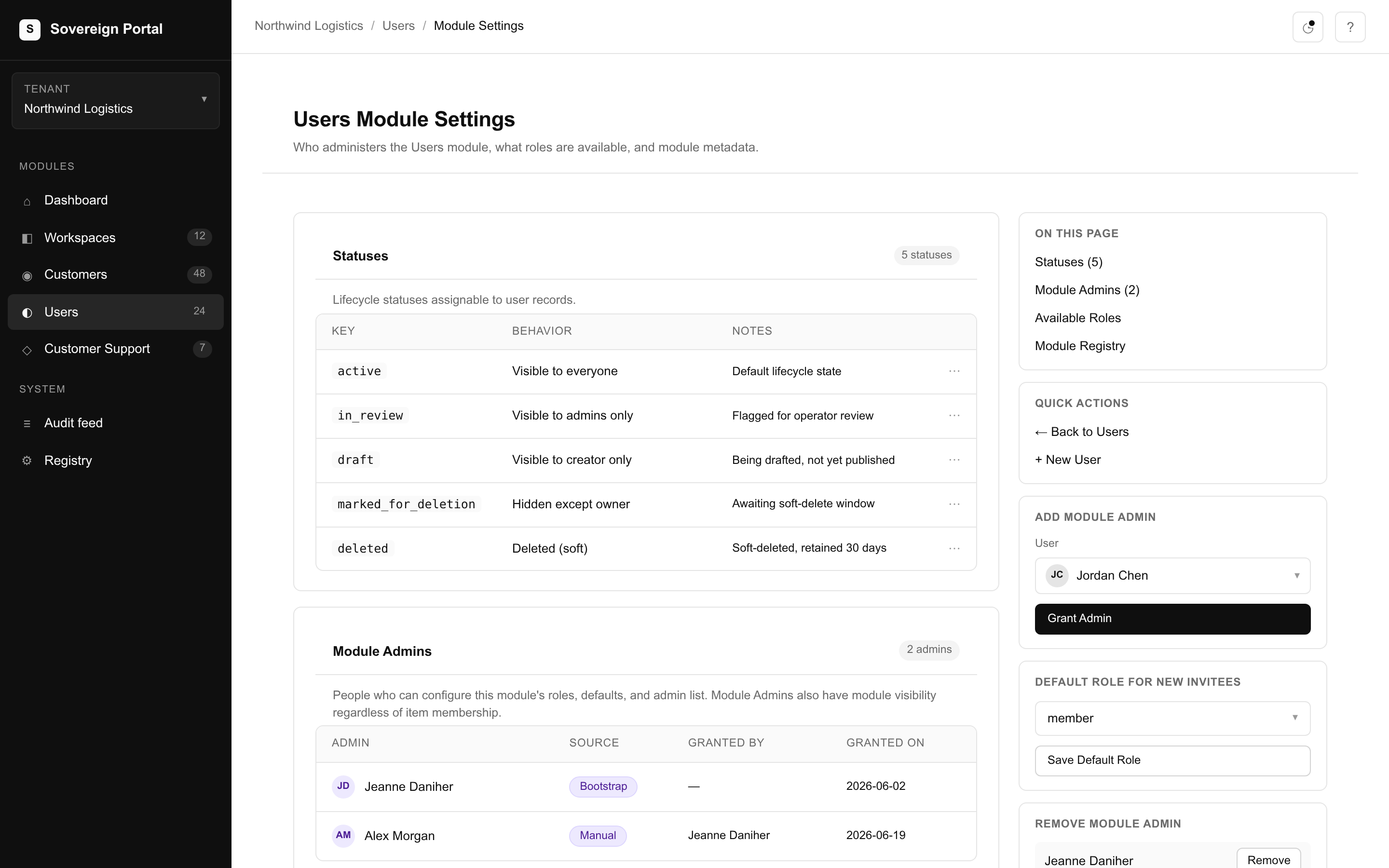
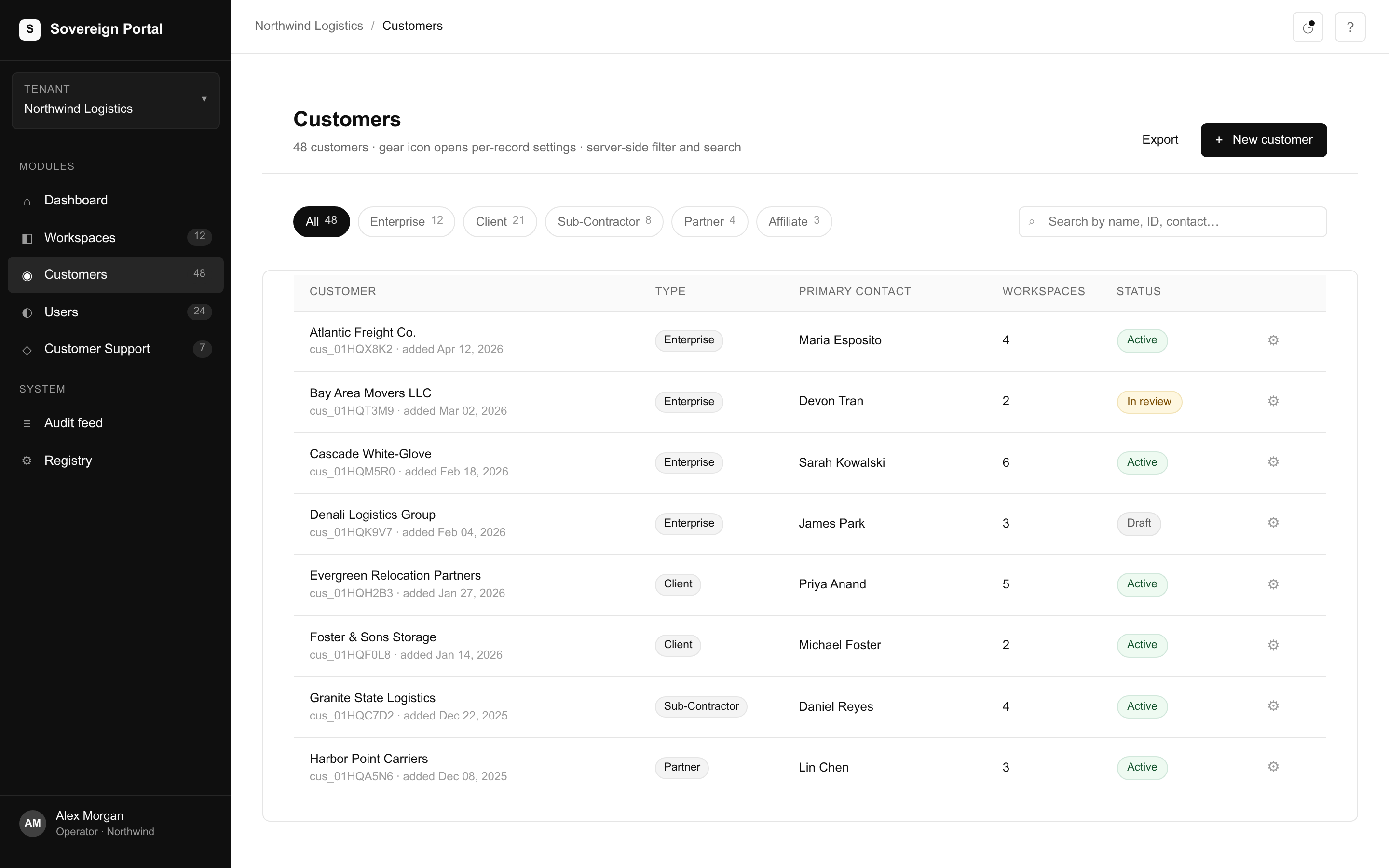
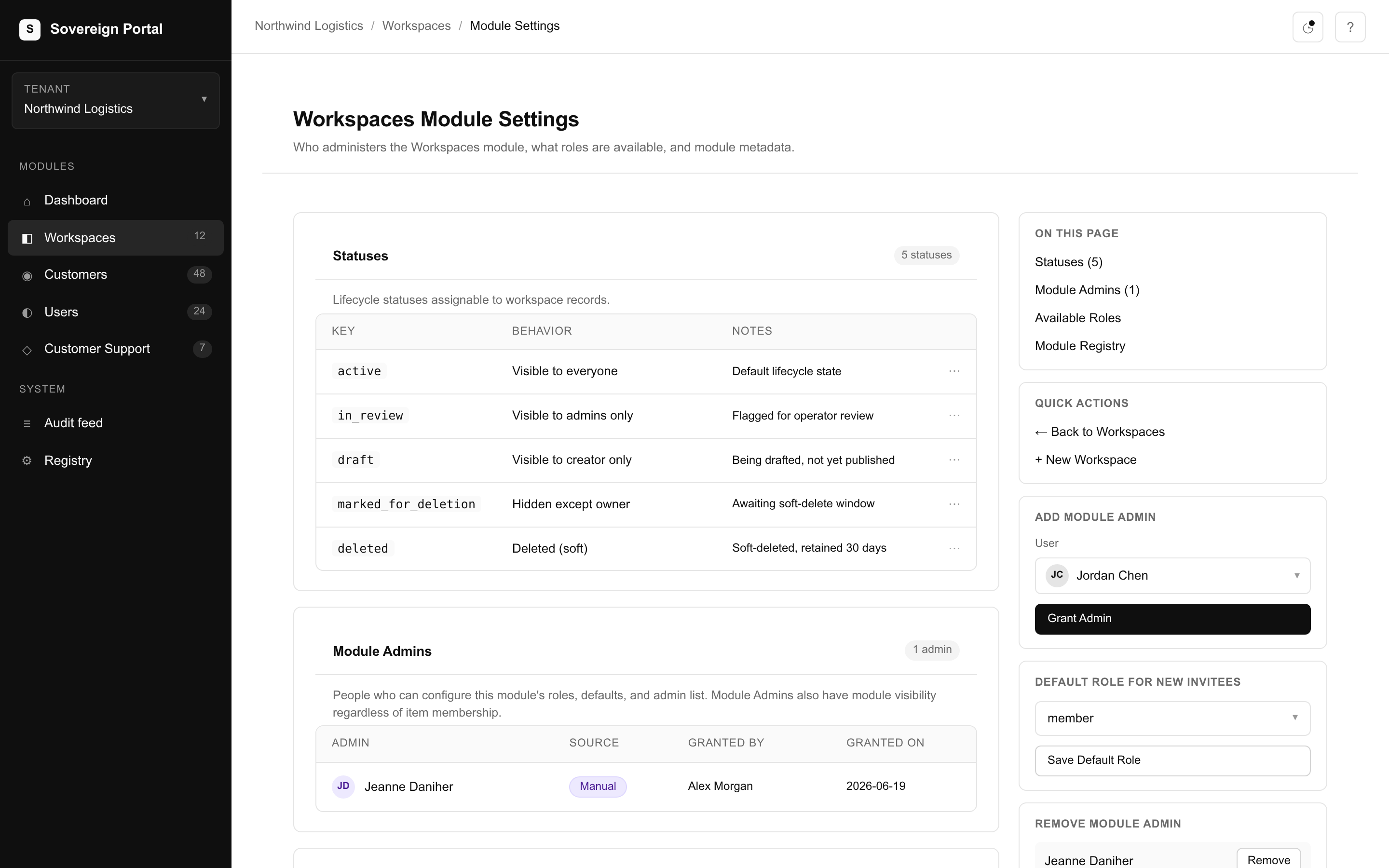
Users, Companies, Workspaces — three real sovereign modules, not stubs. Every app, service, SaaS, dashboard, or portal needs the same three things: who is using it, what companies they belong to, and what workspaces they operate inside. Freshify built those so you don’t have to — and they’re the entry point that lets your team start building the modules that make your product unique on day one.
Why this matters for AI builds
AI has made building software fast. It has also made building it badly faster. Left alone, Claude and Cursor default to monoliths — huge files, mixed responsibilities, permission checks scattered across the UI. That’s how token bills explode and how a working v1 becomes an unfixable v2.
The Sovereign Platform is the framework that keeps AI builds honest. The Standard Module Interface says: this module owns this data, exposes this API, and cannot reach into another module’s internals. Claude physically cannot write a monolith inside a sovereign module without violating a contract that’s obvious on inspection. The 4-Layer Permission Model™ says: user identity is settled here, company boundary is settled here, workspace boundary is settled here — not scattered across the pages your AI is writing.
What that gives you in practice:
App.tsx into every prompt.The Platform doesn’t replace the engineer who reviews the AI’s work. It makes that review possible in the first place.
What you build on top
With the architecture, the SMI, the machinery, and the three foundational modules already in place, your team goes straight to building the modules that make your product unique.
Common modules teams build on top of the Sovereign Platform:
Each one replaces a line item on your SaaS bill and inherits the branding, permission model, tenant boundaries, and data of the Platform it sits inside. You build them yourself, hand them to your dev partner, or have Freshify design and build them for you.
How it’s delivered
Tell us your GitHub username and what you're building on the Platform. Takes 60 seconds.
Within one business day. Pay by card or ACH from the invoice. Card statement reads Egencie, Inc. (DBA Freshify).
On payment, we invite your GitHub account to the private Platform module repos and email you a signed license PDF. Usually same business day.
Why the foundation matters
When institutional investors and acquirers look at your codebase, they run a technical due diligence and a security review. Vibe-coded MVPs and no-code stacks fail both. The Sovereign Platform is architected to pass — because that’s what it was built to do.
For the technical reader
The Platform ships with the same architecture document your engineers build against and the same document a reviewer will read. Four-layer permission model, Standard Module Interface, 20 anti-patterns catalog, module registry and settings model, swappable adapters. Not a marketing PDF.